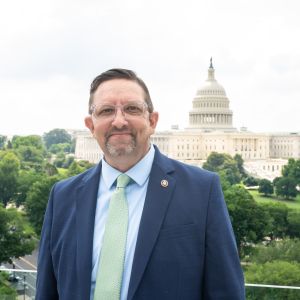
My name is Gene Blankenship. I am from a small town located in Oklahoma, and I am a proud citizen of the Cherokee Nation. Kidney disease has been part of my life since childhood. My first memories of the disease are from around the age of 10, when I watched my father undergo treatment at home. He later passed away from complications of kidney disease, as did my grandfather, and I have watched other members of my family experience end-stage kidney disease and dialysis. In 2003, I was diagnosed with Polycystic Kidney Disease (PKD), which eventually progressed to kidney failure. In 2019, I began hemodialysis three days a week at the Cherokee Nation Redbird Smith Health Complex in Sallisaw, Oklahoma. For nearly three years, dialysis became a major part of my life, giving me firsthand experience with the physical, emotional, and personal challenges faced by dialysis patients and their families.
While undergoing dialysis, I pursued every opportunity for transplantation and was listed at multiple transplant centers across two regions of the United States. On February 9, 2023, I received a deceased-donor kidney transplant at the University of Arkansas for Medical Sciences (UAMS) in Little Rock. Receiving a transplant changed my life, but it did not end my connection to the kidney community. Instead, it strengthened my commitment to advocating for those who continue to sit in dialysis chairs several days each week and for the families who walk alongside them. My experience has taught me that dialysis patients need more than quality medical care, they need strong advocates who understand their challenges and are willing to ensure their voices are heard.
Today, I continue that commitment through both advocacy and public service. I currently serve as the Social Services Director for the Burns Paiute Tribe, where I have the privilege of serving another tribal community while remaining deeply proud of my Cherokee Nation heritage. I also serve on the Dialysis Patient Citizens Board of Directors and have worked alongside patients, caregivers, healthcare professionals, tribal leaders, and elected officials to improve kidney care and patient outcomes. As a former dialysis patient, kidney transplant recipient, tribal citizen, and public servant, I believe our experiences carry a responsibility to help others. I encourage every dialysis patient to recognize the power of their own story. One voice can begin a conversation, one conversation can influence policy, and one change can improve the lives of countless kidney patients and their families.